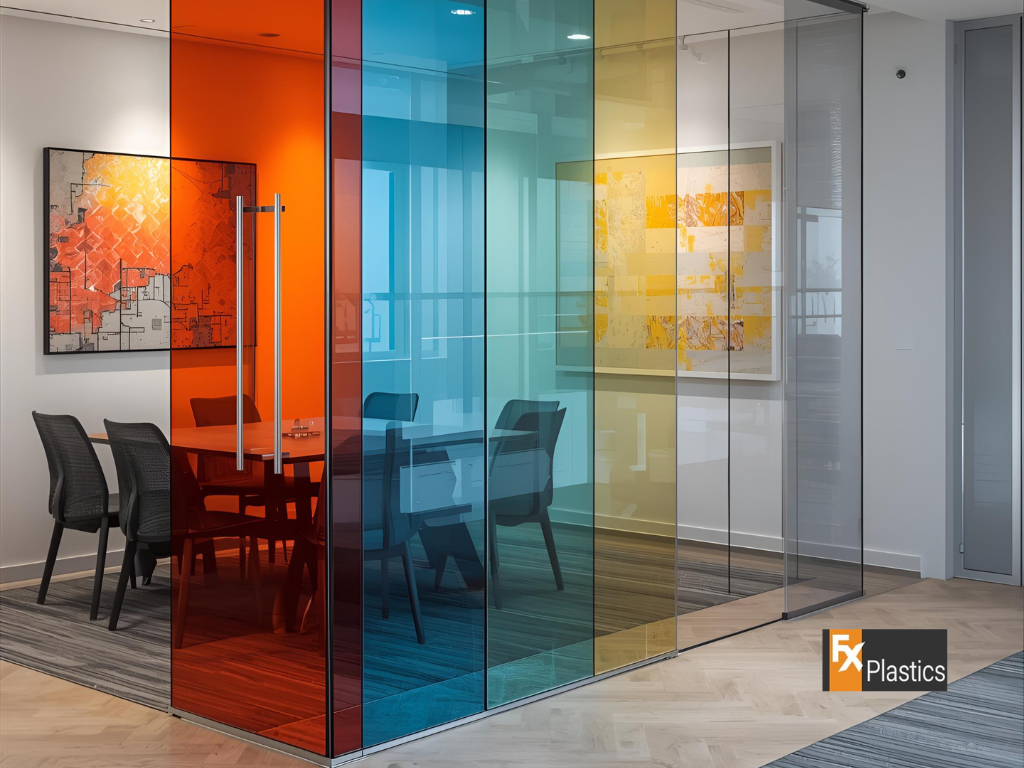
Ordering custom-cut Perspex requires more planning than simply choosing a sheet and providing measurements. Whether you need acrylic panels for retail displays, signage, protective screens or commercial fit-outs, understanding the requirements before contacting a Perspex Cutting Sydney supplier can help prevent material waste, incorrect dimensions and unexpected fabrication costs.
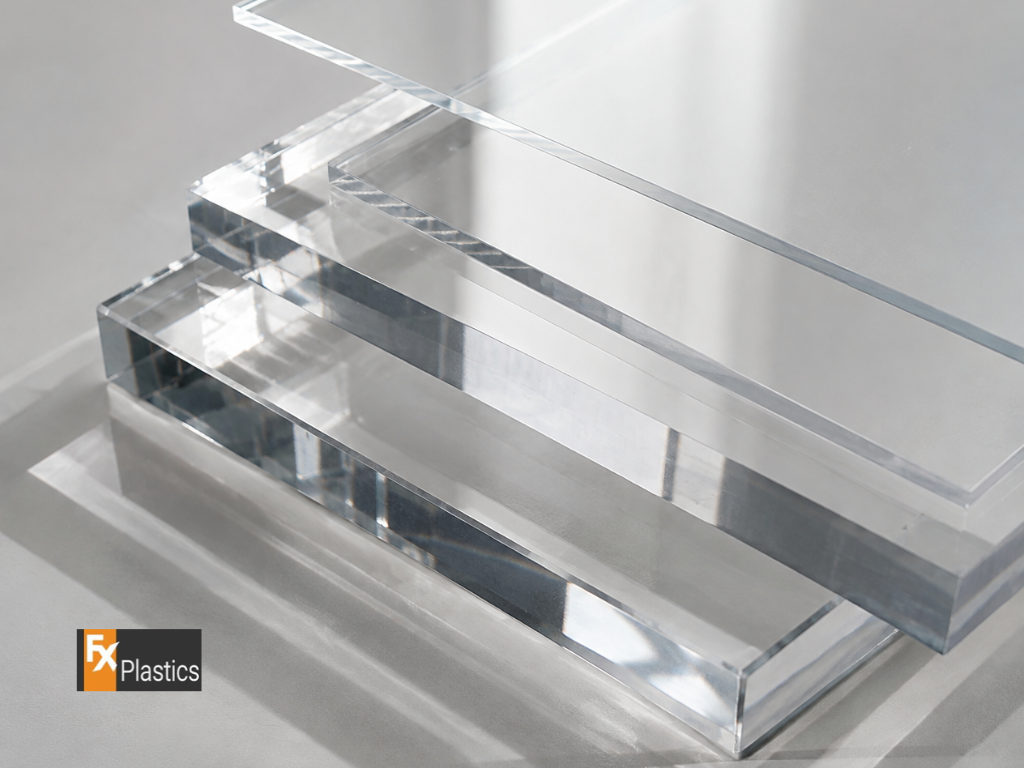
Perspex is a well-known brand of acrylic, a lightweight and versatile material available in different colours, thicknesses and finishes. Its transparency and ability to be cut, shaped and fabricated make it suitable for many residential, commercial and industrial applications.
However, not every acrylic sheet is suitable for every project.
The material type, thickness, dimensions, cutting method and finishing requirements can all influence the final result.
A small measurement error may prevent a panel from fitting correctly, while an unsuitable material selection could affect its appearance or performance.
Preparing accurate specifications before ordering helps suppliers understand what you need and recommend suitable cutting or fabrication options.
Before requesting a quotation, establish how the finished Perspex component will be used.
A clear acrylic panel for a retail display may require different specifications from a protective screen, sign or custom equipment cover.
The supplier will generally need to know the required dimensions, thickness, colour, quantity and intended application.
It is also useful to explain whether the Perspex requires straight cuts, curved shapes, holes, polished edges or additional fabrication.
For example, a business ordering acrylic panels for a reception counter may need openings for customer transactions, suitable fixing points and specific edge finishes.
Providing a drawing or detailed sketch can help communicate these requirements.
If the design involves several components that must fit together, the relationship between the individual parts should also be explained.
A clear project brief gives the supplier a better understanding of the intended result before manufacturing begins.
Acrylic cutting is based on the measurements and instructions provided.
If those specifications are incorrect, the finished component may not fit its intended location.
For example, a panel cut to exactly the same dimensions as an installation opening may not allow sufficient clearance for fittings, movement or manufacturing variations.
Similarly, holes positioned too close to an edge may create installation problems or increase the risk of damage.
Incorrect material thickness can also affect the compatibility of brackets, supports and other components.
These issues may require additional fabrication or replacement materials.
For customers ordering perspex cut to size, checking the specifications before production is generally more practical than trying to modify an unsuitable finished panel.
Clear communication between the customer, supplier and installer helps reduce the likelihood of avoidable errors.
One of the most common ordering mistakes is selecting acrylic based only on appearance or price.
Although many Perspex sheets look similar, their manufacturing processes, thicknesses and performance characteristics can differ.
When comparing Perspex Cutting Sydney services, customers should consider the intended application before choosing a particular sheet.
Acrylic sheets are commonly available in cast and extruded forms.
Cast acrylic is produced through a casting process and is frequently selected for applications involving machining, engraving, detailed fabrication or particular surface finishes.
Extruded acrylic is produced through an extrusion process and generally offers more consistent sheet thickness, which can be useful for certain fabrication requirements.
Both materials can be suitable for a wide range of applications.
However, their behaviour during cutting, drilling, heating and finishing may differ.
For example, cast acrylic is often preferred for certain laser engraving applications because it can produce a contrasting frosted appearance.
Extruded acrylic may respond differently to machining and heat, so the cutting process should be selected accordingly.
The best choice depends on the design, required finish and manufacturing method.
Customers sourcing Perspex Sydney products should confirm whether the proposed material is cast or extruded acrylic rather than assuming the two are interchangeable.
It is also important to confirm whether the supplied sheet is genuine Perspex-branded material or another acrylic product where a particular brand specification is required.
Perspex thickness influences rigidity, weight, fabrication requirements and the way a panel performs in its intended application.
A small decorative sign may have different requirements from a large unsupported acrylic screen.
Panel dimensions are particularly important because larger sheets may flex more than smaller panels of the same thickness.
Support arrangements, fixing points and expected loads should therefore be considered.
For example, a freestanding screen may require a different thickness or support design from a panel secured within a suitable frame.
When sourcing a Perspex sheet Sydney supplier, customers should confirm the available thicknesses rather than assuming every product comes in identical sizes.
Sheet thickness can also affect cutting methods, edge finishing and the cost of fabrication.
For protective panels or other applications involving safety requirements, thickness should not be selected using a general recommendation alone.
The appropriate material and construction should be determined according to the intended use, dimensions, support system and relevant safety considerations.
Discussing these requirements before ordering can help avoid purchasing a sheet that is too flexible, unnecessarily heavy or unsuitable for installation.
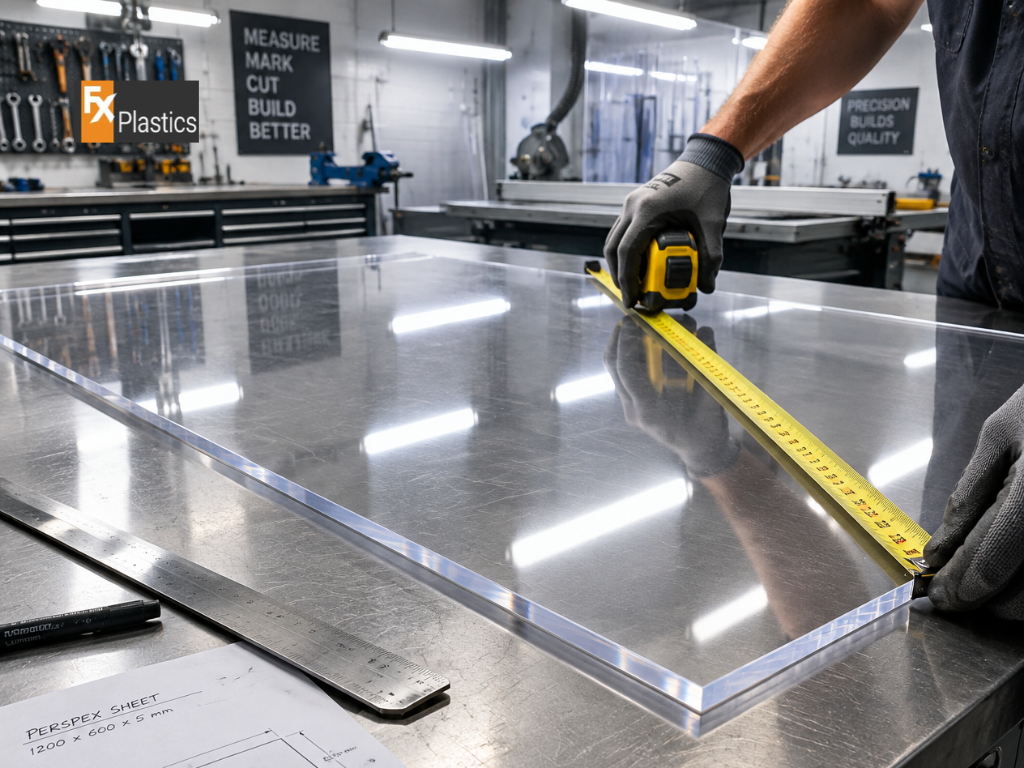
Accurate measurements are essential when ordering custom-cut acrylic.
A supplier can manufacture a panel according to the dimensions provided, but those dimensions must reflect the actual installation requirements.
Customers researching Perspex Cutting Sydney should understand the difference between measuring a space and specifying the finished size of a Perspex component.
Before ordering, measure the location where the Perspex will be installed.
For rectangular panels, confirm the required width and height, making sure measurements are recorded consistently.
If the installation opening is not perfectly square, measurements may be needed at several points.
The smallest available clearance can be particularly important when a panel must fit within an existing frame.
However, the final panel dimensions should be determined according to the installation method rather than automatically using the smallest measurement.
Fixings, frames, hinges, seals and brackets may require additional space.
Acrylic can also expand and contract with temperature changes, so suitable movement allowances may be necessary.
The required clearance depends on the panel dimensions, installation environment and fixing arrangement.
Customers should also consider whether the finished piece needs to overlap an opening or sit inside it.
For example, a panel designed to cover an opening may require larger dimensions than the opening itself.
Where installation details are uncertain, discussing the proposed arrangement with the fabricator or installer before confirming dimensions can help avoid mistakes.
Written dimensions are more reliable than relying on photographs or rough sketches alone.
For a basic rectangular panel, the supplier may only need the finished width, height, thickness and quantity.
More complex designs may require a detailed drawing.
Curved shapes, internal cut-outs, mounting holes and shaped corners should be clearly identified.
If several components must connect, the drawing should explain their relationship and how they will be assembled.
Where available, technical drawings can help communicate dimensions and features accurately.
Customers requesting perspex cut to size Sydney services should ask the supplier which drawing formats are preferred.
For example, a fabricator may be able to work from a dimensioned PDF, CAD drawing or another suitable file.
However, the accepted formats and level of detail required depend on the supplier’s process.
All measurements should use a clearly stated unit, such as millimetres.
Hole locations should be dimensioned from defined reference edges, and the required hole diameter should be included.
It is also useful to confirm whether the dimensions refer to the finished component rather than the original sheet size.
For designs requiring close-fitting parts, discuss the necessary manufacturing tolerances before approving the order.
Different cutting processes can produce different results.
Choosing a suitable method depends on the acrylic type, thickness, shape and required finish.
When evaluating Perspex Cutting Sydney options, customers should explain the intended appearance and function rather than assuming one cutting technique is suitable for every design.
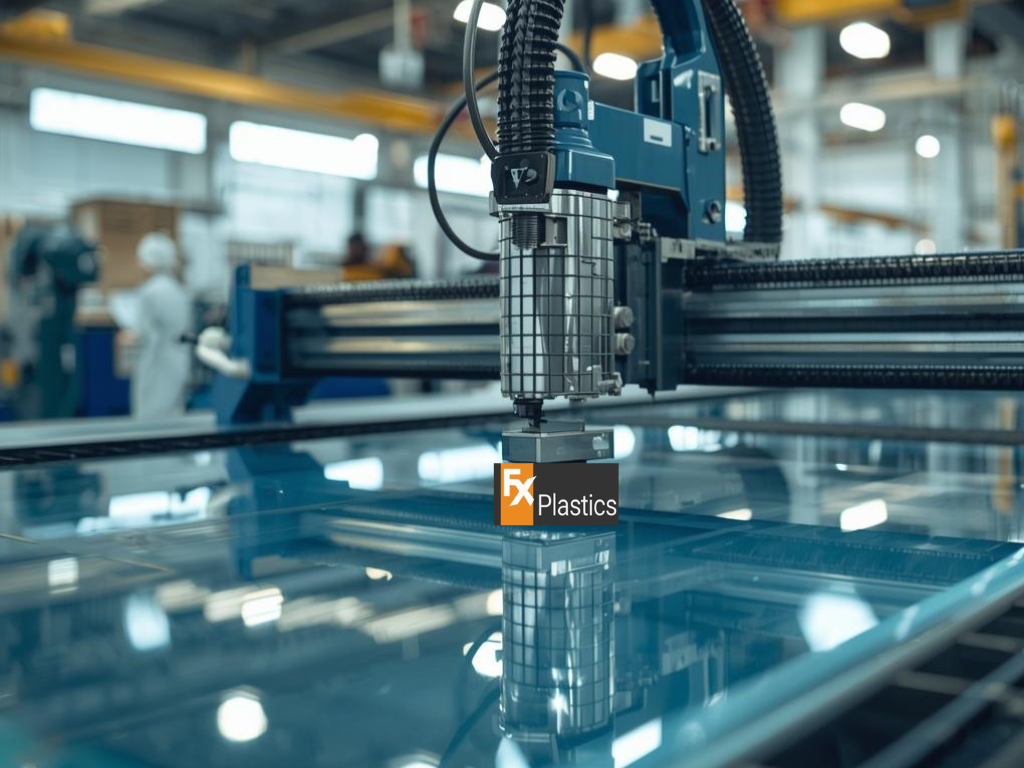
Laser cutting is commonly used for acrylic components requiring detailed shapes, lettering and decorative profiles.
Depending on the acrylic type, thickness and machine settings, laser cutting can produce smooth, glossy edges.
This can be useful for display products where the edge remains visible.
CNC routing and machining provide other options for shaping acrylic.
These processes can be suitable for larger components, particular material thicknesses and designs requiring machined details.
CNC machining may also be appropriate for producing specific profiles, recesses or other features that cannot be achieved through basic sheet cutting.
For straightforward rectangular panels, CNC saw cutting may be sufficient.
The most appropriate method depends on the finished component rather than the complexity of the equipment used.
Acrylic type, sheet thickness, design geometry and finishing expectations all influence the decision.
Some components may require several fabrication processes.
For example, a panel may be cut to size before having holes drilled, edges finished or sections bonded together.
Customers should confirm which operations are included in the quotation.
Edge finishing can affect both the appearance and handling of a Perspex component.
A standard cut edge may be appropriate when the edge will be hidden inside a frame or is not a prominent visual feature.
For decorative displays or exposed panels, a polished edge may be preferred.
Polishing can improve the clarity and appearance of suitable acrylic edges, although the final result depends on the material and finishing method.
Other projects may require edges to be smoothed, rounded or prepared for bonding.
Customers should also consider whether sharp corners need to be softened for handling or installation.
Not every cutting method produces the same edge appearance, and an additional finishing process may be necessary.
For example, a machined edge may require further work where a high-gloss finish is desired.
When requesting a quote, specify which edges will remain visible and whether a particular finish is required.
This helps avoid misunderstandings about the completed product.
A clear description of the desired edge finish also makes it easier to compare quotations from different suppliers.
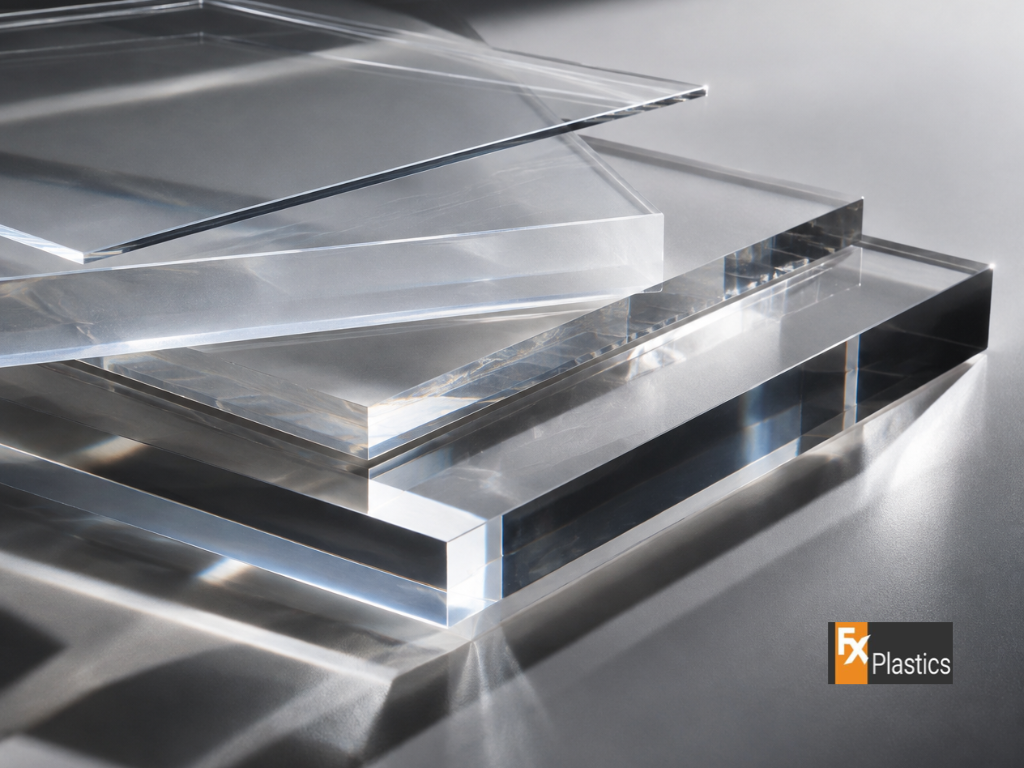
Perspex is used for a wide range of commercial screens, protective panels, retail displays and custom fabricated components.
However, these products often require more detailed planning than a simple cut-to-size sheet.
Customers considering Perspex Cutting Sydney services should explain how the finished component will be supported, installed and used.
Counter screens and separation panels are commonly used in reception areas, retail environments and other customer-facing spaces.
When ordering Perspex screens Sydney products, buyers should consider the dimensions of the installation area and how the screen will be positioned.
For example, a screen installed above a service counter may require a stable mounting arrangement and a suitable opening for passing documents or products.
The panel should not obstruct essential access or create unnecessary handling hazards.
A freestanding screen may need a different support system from one fixed to a wall or counter.
The intended use also affects material selection.
A general separation screen should not automatically be treated as a safety-rated impact barrier.
Similarly, clear acrylic does not provide the same performance characteristics as every other transparent sheet material.
Customers ordering Perspex counter screens Sydney products should clarify whether the screen is intended for visual separation, splash protection or another specific purpose.
Any required performance characteristics should be discussed before manufacturing.
This helps ensure that the finished product is designed for its actual application rather than selected based on appearance alone.
Mounting details are an important part of custom acrylic fabrication.
A panel may require drilled holes, slots, brackets, supports or bonded components.
These features need to be positioned accurately to suit the final installation.
For example, mounting holes should align with the selected fittings and provide appropriate clearance.
Their size and distance from panel edges should also be suitable for the acrylic thickness and fixing arrangement.
Poorly positioned holes can create stress concentrations or increase the risk of cracking.
Large panels may require additional support depending on their dimensions and operating conditions.
For custom guards or equipment covers, the requirements may be more demanding.
Businesses researching Perspex guard manufacturing Sydney should distinguish decorative covers and general protective panels from machine guards designed to control workplace hazards.
Safety-critical machine guarding requires assessment of the machinery, foreseeable hazards, impact risks, access requirements and applicable workplace safety obligations.
Acrylic is not automatically suitable for every machine guard.
Where a component is intended to protect people from machinery, material selection and guard design should be determined through an appropriate safety assessment.
Providing the supplier with complete installation and performance requirements can help identify whether acrylic is suitable or another material or construction method should be considered.
An accurate quotation depends on the information supplied.
If important details are missing, the estimated cost may not reflect the final manufacturing requirements.
When comparing Perspex Cutting Sydney suppliers, customers should understand what is included in the quotation and confirm any outstanding specifications before approving the order.
A useful Perspex cutting enquiry should clearly describe the required material and finished component.
The material type, colour, thickness and quantity should be confirmed.
Finished dimensions and cutting requirements are equally important.
If the design includes curves, holes, cut-outs or complex shapes, these details should be included in the drawing or written specifications.
Customers should also state whether polished edges, rounded corners, bending, bonding or other fabrication work is required.
The intended application can help the supplier identify whether additional information is necessary.
For example, a retail display may need a particular appearance, while a panel installed in a commercial fixture may require suitable mounting details.
Perspex cutting costs depend on factors such as material selection, sheet size, quantity, cutting complexity and finishing.
Additional fabrication, packaging and delivery requirements may also affect the quotation.
Customers should ask whether the price includes material, cutting, finishing and any other requested operations.
Where the supplier recommends changes to the original specifications, those changes should be confirmed before production.
Comparing quotations is easier when each supplier is pricing the same scope of work.
Before placing an order, confirm the total number of finished components required.
If several parts are similar but have different dimensions, they should be identified separately.
This is particularly important for retail fit-outs, display installations and other projects involving repeated components.
Customers should also confirm material availability.
Not every colour, thickness or finish is necessarily available from stock.
Specialised materials or additional fabrication processes may affect production scheduling.
Lead times should therefore be confirmed directly with the supplier rather than assumed from a general service description.
Delivery arrangements also require attention.
Large acrylic sheets and finished components may need suitable packaging to reduce the risk of scratches, cracks or other damage during transport.
For customers ordering Perspex Sydney products, it is worth checking whether the supplier offers collection, delivery or another suitable arrangement.
Access restrictions should be discussed where relevant.
For example, delivering large panels to a commercial building may require coordination with loading facilities or site personnel.
When the order arrives, check the supplied components against the approved specifications and inspect them for visible damage before installation.
Identifying an issue promptly can help clarify what needs to be addressed before the project continues.

A successful Perspex order begins with clear requirements and an understanding of how the finished component will be used.
Whether the project involves signage, display panels, counter screens or custom fabrication, careful preparation helps suppliers provide relevant advice.
Before selecting a Perspex Cutting Sydney provider, it is worth reviewing the material, dimensions, finishing and installation details together.
The final review should begin with the acrylic sheet selection.
Confirm the required material type, colour, thickness and finish.
Check that the product is suitable for the intended application and that any specific performance requirements have been considered.
Next, review the finished dimensions.
Width, height, cut-outs and hole locations should match the approved drawings.
Any necessary installation clearances should already be reflected in the specifications.
Where the design includes several components, confirm that the parts are compatible and that assembly requirements have been communicated.
Edge finishing should also be checked.
For exposed panels, specify whether a standard, smoothed or polished finish is required.
If the project needs bending, bonding or other fabrication services, these operations should be clearly included in the order.
Finally, confirm quantities, quotation inclusions, expected availability and delivery arrangements.
Taking these steps before manufacturing begins can help reduce misunderstandings and avoid unnecessary changes.
The right supplier should be able to explain how the proposed material and cutting method relate to the finished product.
Customers should compare providers based on the services required rather than selecting solely on the initial price.
For example, a project involving simple rectangular panels may have different requirements from one involving complex profiles, polished edges and assembled acrylic components.
FX Plastics provides acrylic fabrication services, including CNC saw cutting, CNC routing and machining, laser cutting, diamond polishing, acrylic screens, and design and fabrication.
These capabilities may be relevant to customers requiring cut-to-size Perspex or more detailed acrylic components.
Customers can explore FX Plastics to learn more about its available services and fabrication capabilities.
For projects requiring custom dimensions, material advice or additional fabrication, discussing the design before placing an order can help clarify the manufacturing requirements.
You can also contact FX Plastics to enquire about Perspex cutting, product specifications and quotation requirements.
Whether you are ordering a single acrylic panel or components for a larger commercial project, preparing accurate information makes the process easier to manage.
By confirming material selection, finished dimensions, cutting methods, edge treatments and installation details before production, Sydney customers can reduce avoidable ordering mistakes and make more informed decisions about custom-cut Perspex.