When people ask how much laser-cut acrylic costs, they often expect a simple rate per sheet or per cut. In practice, a useful quote needs more information than that.
The price can change according to the acrylic type, thickness, amount of sheet material required, total cutting distance, number of small features, quantity, artwork preparation and any finishing or fabrication needed after cutting. Two parts with the same outside dimensions can therefore have very different production requirements.
This is particularly important when comparing Acrylic Laser Cutting Sydney services. A plain rectangular panel, a detailed logo, an interlocking retail display and a component with dozens of internal openings may all start with acrylic sheet, but they do not require the same amount of material or machine time.
Technical guidance from Trotec also shows why thickness cannot be separated from production time. Laser power, processing speed and edge quality are connected, while thicker acrylic generally requires different machine settings and processing conditions.
Understanding the main cost factors makes it easier to prepare a useful enquiry and compare quotations on the same basis rather than simply choosing the lowest number.
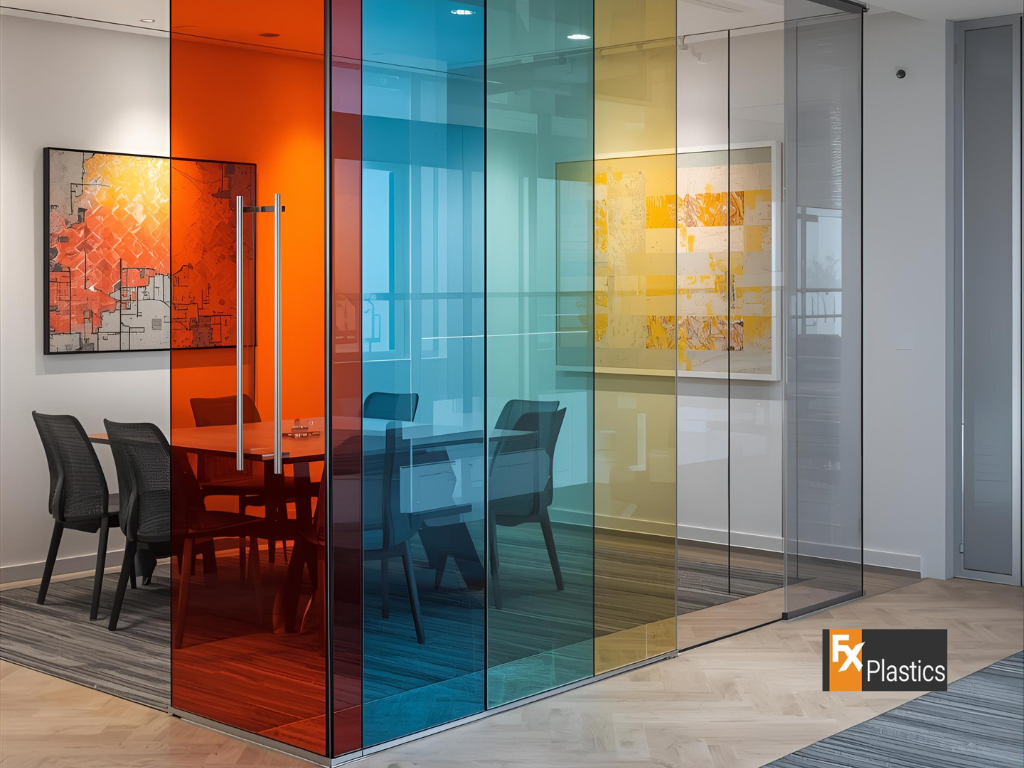
Acrylic is available in more than one form, colour and finish.
A straightforward clear sheet may have different pricing and availability from coloured, frosted, mirrored or speciality acrylic. The exact options also vary between suppliers, so it is worth checking stock before designing a project around a particular material.
For example, a clear machine cover may be relatively simple to specify, while a branded retail display may require a particular colour or surface appearance. If that specific sheet is less commonly stocked, the material side of the quote can differ even when the components are the same size.
Cast and extruded acrylic can also behave differently during laser processing. Trotec notes that the two types respond differently to cutting and edge formation, with extruded acrylic generally requiring less laser power than cast acrylic of the same thickness under comparable conditions.
That does not mean one type is always cheaper or better. Material should first suit the finished application, appearance and fabrication requirements.
When requesting Acrylic Laser Cutting Sydney pricing, state the acrylic type and colour if you already know them. If you do not, explain what the finished part needs to do and let the fabricator discuss suitable options.
A thicker sheet contains more material, but that is only part of the pricing difference.
The laser also has to process through a greater depth.
Trotec’s acrylic guidance explains that laser power has a direct relationship with processing speed, edge quality and productivity, and that thicker material generally requires higher power or adjusted processing conditions.
For the buyer, the practical lesson is not to select the thickest sheet available simply because it seems more substantial.
A small sign, menu holder or decorative insert may not need the same thickness as a large freestanding panel or equipment cover.
Extra thickness can add material cost and may increase cutting time without providing a useful benefit to the finished product.
Choose the thickness around the part’s size, support, appearance and function, then have the fabricator confirm that it suits the intended CNC laser cutting process.
A large rectangular panel may contain very little design complexity, but it still occupies a large portion of a sheet.
This is why finished dimensions matter when requesting a quote.
Suppose one project needs a single small acrylic logo while another needs several large clear panels. The logo may contain more curves and detailed cutting, but the large panels may require considerably more sheet material.
The quote needs to account for both factors.
Standard sheet dimensions also matter because the finished part has to fit efficiently within the available material.
A component that is only slightly too large to fit twice across a standard sheet could require an additional sheet even though the dimensional increase seems minor.
This is one reason why accurate dimensions are useful early in the design process.
For a Laser Cutting Western Sydney project involving large panels or repeat production, providing the complete part dimensions gives the fabricator a better opportunity to plan material use before pricing the job.
Nesting means arranging several components across a sheet so the available material is used efficiently.
Simple rectangular components may fit together neatly. Curved parts, letters and irregular shapes can leave more unused space between them.
The spacing required for the production process also needs to be considered, so the goal is not simply to squeeze shapes together as tightly as possible.
For repeat orders, efficient nesting becomes particularly important because a small amount of waste repeated across many sheets can become a meaningful material cost.
The existing project material for FX Plastics also identifies sheet layout and nesting as practical considerations in repeat CNC production.
If your project contains several different parts, send the complete set of drawings at the same time where possible.
A fabricator may be able to arrange compatible components together more efficiently than if each item is quoted and produced as a separate job.
Acrylic laser-cutting cost is not based only on the outside dimensions of the finished part.
The machine follows every required cut path.
A plain 500 mm square has a relatively simple perimeter. Another 500 mm square containing twenty slots, a detailed logo and several internal openings requires considerably more cutting.
This is why the total cutting path matters.
Decorative lettering is another good example. A large solid letter may require only an outside profile, while a detailed typeface can contain multiple internal shapes and finer movements.
When comparing laser cutting sydney quotes, make sure suppliers are pricing the same final artwork. A quote based on an early simplified sketch should not be compared directly with one based on the final detailed production file.
Small artwork changes can alter the manufacturing requirement even when the overall dimensions remain unchanged.
Laser cutting is useful for detailed two-dimensional acrylic work, but very fine features still need to suit the material.
Narrow bridges between cut-outs, tiny holes, very thin lettering and closely spaced details may need additional review before production.
These features can also affect handling after cutting. A detail that survives the machine process may still be too fragile for assembly, transport or installation if too little material remains around it.
Trotec’s current guidance confirms that settings such as power, speed, frequency, focus and acrylic type influence edge quality and the way acrylic responds during laser cutting.
For a laser cut acrylic project with fine graphics or interlocking details, provide the actual vector or CAD artwork rather than describing the design only by its outside measurements.
The fabricator can then assess the real cutting path and identify details that may need adjustment before the quote becomes a production order.
Ordering one acrylic component does not mean the only work involved is the few seconds or minutes during which the laser is cutting.
The supplier may need to review the file, confirm dimensions, check material, prepare artwork, arrange the sheet, set up the job and inspect the finished part.
Those activities still occur when only one component is required.
This is why prototypes and one-off pieces can have a different cost per item from larger batches.
However, a prototype can still be worthwhile.
If a component has tabs, slots, fitted holes or other critical features, checking one finished piece before producing a larger quantity may help identify design changes before they are repeated across the whole order.
For projects where fit is important, the cost of one prototype can be more useful than discovering a problem after a full production run has been completed.
When several identical parts are required, some preparation can be spread across a larger quantity.
The same approved production file can be used repeatedly, and multiple components may be arranged on the same sheet.
That does not mean quantity automatically produces a fixed percentage discount. Material consumption and actual production requirements still matter.
For example, ordering twenty parts that nest efficiently may have a different material requirement from twenty large irregular parts that create substantial off cuts.
Repeat jobs also benefit from controlled drawings.
Use a clear part number or revision so the supplier knows exactly which design is being produced. If dimensions change between orders, issue an updated file rather than relying on instructions hidden in an email.
For customers using CNC Cutting Services Western Sydney, this kind of file control can make quotations and repeat production easier to compare.
Acrylic components do not always leave the cutting machine ready for use.
A sign may require engraving. A display may need bending and bonding. A machine guard could require holes, mounting components or additional fabrication. Visible edges may need a specific finish.
These requirements can all affect the final price.
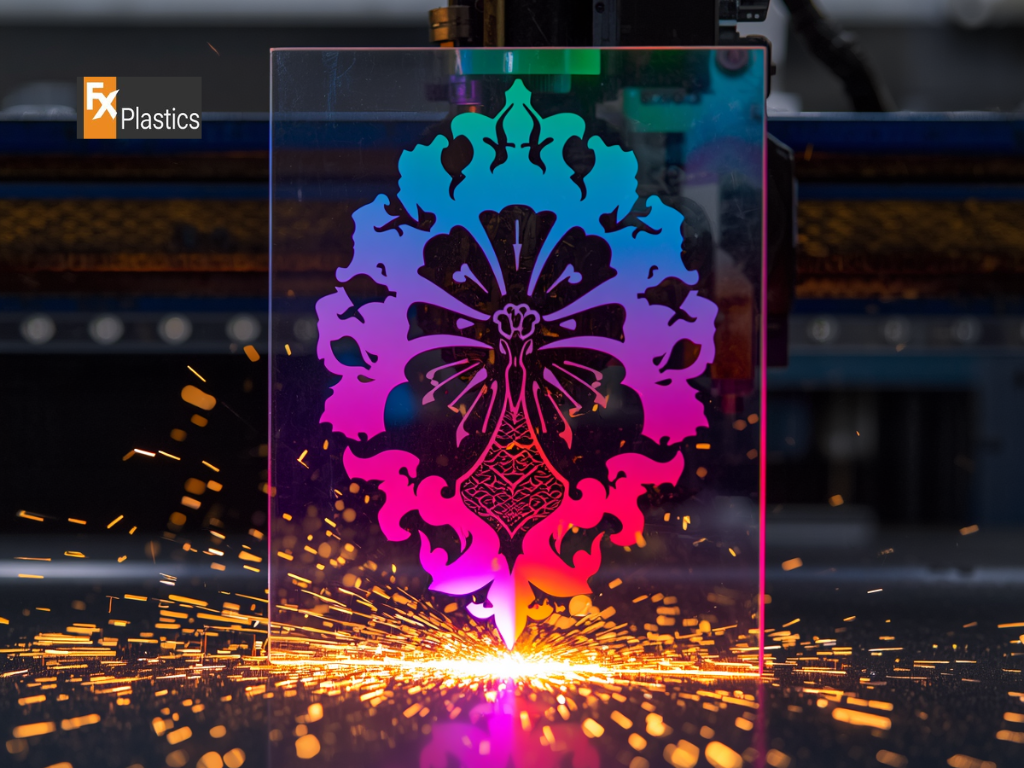
Laser processing itself can sometimes produce a smooth, polished-looking edge on suitable acrylic. Trotec explains that CO₂ laser cutting can create glossy acrylic edges under suitable material and machine conditions, potentially reducing the need for separate manual finishing on some applications.
However, the desired result needs to be discussed rather than assumed.
Some edges may remain hidden inside a frame and need no decorative treatment. Others may be clearly visible on a display and require greater attention.
State which surfaces matter visually so the supplier is not forced to guess.
The order in which a plastic component is manufactured can matter.
If a panel will later be bent, bonded or assembled with several other pieces, the flat cutting stage should be planned with those later steps in mind.
A hole positioned too close to a bend, for example, may create a fabrication issue. Interlocking components need dimensions that work together. Bonded edges may require different preparation from decorative exposed edges.
FX Plastics currently lists CNC laser cutting, CNC routing and machining, CNC saw cutting, diamond polishing and Design and Fabrication among its services.
That can be relevant when a project needs more than cutting alone.
When requesting a quote from FX Plastics or another fabricator, explain what the finished object will be rather than sending isolated flat parts with no context.
This gives the supplier a better chance to include the required fabrication stages from the start.
Laser cutting can be an effective choice for acrylic lettering, signs, retail components, decorative profiles and other detailed two-dimensional shapes.
Suitable acrylic can also develop a neat visible edge during laser processing, which can be useful for display applications.
However, a laser should not automatically be specified because the project involves plastic.
Material, thickness, geometry and final finish all matter.
FX Plastics’ existing CNC cutting guidance similarly separates CNC laser cutting from routing and saw cutting rather than treating one process as suitable for every component.
Customers comparing Laser Cutting Western Sydney suppliers should therefore describe the finished component and allow the fabricator to assess whether the laser is the practical process.
The lowest laser-cutting price is not necessarily the lowest finished cost if another process could create the required part more efficiently.
CNC saw cutting is often a practical option for straight rectangular panels and sheet blanks.
If the job requires nothing more than accurate straight cuts, using a laser may add complexity without improving the finished result.
CNC routing provides another option. It can create shaped profiles, slots, holes, recesses and machined details and can be useful where a component requires more than a simple cut-through profile.
The existing project material identifies this same distinction: CNC saw cutting for straightforward panels, CNC laser cutting for finer acrylic profiles and routing for shapes or machined features that need a rotating cutting tool.
FX Plastics currently publishes all three processes among its service capabilities. Its current contact information lists its workshop at Units 1 & 2, 21 Hickeys Road, Penrith, which can be relevant for buyers comparing CNC Cutting Services Western Sydney.
The useful buying question is therefore not simply, “How much is laser cutting?”
Ask, “Which process gives this part the required shape, edge and finish without adding work that the design does not need?”
A more accurate quotation starts with a more complete brief.
Provide the acrylic type if known, along with the colour, thickness, finished dimensions and quantity.
Your drawing should show the complete outside profile and every internal hole, slot or opening. If several pieces fit together, include enough information for the fabricator to understand the assembly.
Identify important dimensions and tolerances rather than applying an unnecessarily tight tolerance to every measurement.
Also state which edges will be visible and whether engraving, polishing, bending, bonding or other fabrication is required.
For a detailed shape, send the production file as well as the visual reference. CAD or vector artwork allows the supplier to inspect the actual cutting paths.
For repeat jobs, include the approved revision.
These details make it much easier to compare cnc cutting services because each supplier is pricing the same scope.
Before approving the quotation, check what the price represents.
Confirm the material, thickness and quantity being supplied. Check the cutting method and whether artwork preparation or setup is included.
If the part needs polishing, engraving or additional fabrication, make sure those stages are covered.
Packaging and delivery may also matter, particularly for clear acrylic or finished display components that need protection from scratching during transport.
FX Plastics can be contacted when a project requires Acrylic Laser Cutting Sydney services or when the correct process is still unclear. Its current published capabilities include CNC laser cutting, CNC routing and machining, CNC saw cutting, diamond polishing and broader Design and Fabrication support.
The company also currently lists clear and coloured acrylic sheet options, including cut-to-size products.
For the most useful discussion, send the finished design and describe what the part needs to do instead of asking only for a price per cut.
The final cost of laser cut acrylic is usually the result of several connected decisions rather than one machine rate. Material choice, thickness, sheet utilisation, cutting distance, fine detail, quantity and finishing all affect the scope.
By preparing those details before requesting a quote, Sydney buyers can compare suppliers more fairly and avoid paying for manufacturing steps the finished part does not need.