A digital drawing may show exactly what a plastic part should look like. However, it does not automatically tell you how that part should be cut.
A rectangular panel has different production needs from a detailed acrylic sign. A machine guard with holes and slots creates another set of requirements.
This is why customers comparing CNC Cutting Services Western Sydney should look beyond accuracy alone.
The material, shape, edge finish and final use can all influence the cutting process.
Australian plastic fabricators commonly use saw cutting, laser cutting and CNC machining for different types of work. Laser cutting can create detailed profiles and a neat edge on suitable acrylic, while saws are commonly used for straightforward panel cutting. CNC machining adds another option for shaped and machined components.
Understanding these differences can help you prepare a clearer brief and compare supplier quotes properly.
Start by identifying the actual material.
Acrylic is only one option. Commercial fabricators may also work with poly-carbonate, PVC, HDPE and other sheet plastics. The right cutting process can vary between materials.
Do not assume that a method suitable for acrylic will suit every plastic.
Instead, tell the fabricator the exact material or explain the intended use if you have not selected it yet.
For example, a clear display panel has different needs from an industrial machine component.
Thickness also matters.
A supplier needs this information when considering equipment, cutting strategy and the final edge.
When appearance matters, mention that from the beginning.
The best manufacturing choice depends on the complete part rather than the material name alone.
Next, look at the geometry.
A square or rectangular panel may only need accurate straight cuts.
A shaped component may include curves, holes and slots. Signage could include letters or detailed outlines.
These parts do not require the same process.
acrylic Plastic currently uses panel saws for cut-to-size plastic and offers laser and CNC cutting for more detailed machining work.
Think about what you expect to receive after cutting.
Do you need a plain panel ready for installation?
Or will the part need holes, polished edges, bends or other fabrication?
Answering that question early can narrow the process quickly.
CNC saw cutting can make sense when a project mainly needs straight cuts.
Typical examples include rectangular panels, shelves, inserts and blanks that will move to another fabrication stage.
Panel saws are widely used by Australian plastic suppliers for cutting sheet material to size.
The process can be practical when the design does not contain detailed curves or internal shapes.
For example, a business may need twenty acrylic panels at the same width and height.
There may be no reason to use a more detailed process when accurate straight cutting meets the specification.
However, provide finished dimensions rather than rough measurements.
Also state the quantity and sheet thickness.
This gives the supplier enough information to assess the job before cutting begins.
A mechanically cut acrylic edge can show cutting marks.
Perspex Australia’s current acrylic guide explains that saw cutting can leave visible abrasions and sharpness on the finished edge. Extra finishing can therefore matter when customers will see the edge.
That does not make saw cutting a poor choice.
It means the cutting method and finish should be planned together.
A hidden edge inside a frame may need no decorative polishing.
A clear shelf or retail display may be different.
If appearance matters, ask what the supplied edge will look like.
Diamond polishing or another suitable finishing process may be available for exposed acrylic edges. Australian fabricators currently offer diamond edge polishing alongside cut-to-size and CNC services.
This lets you pay for finishing where it adds real value.
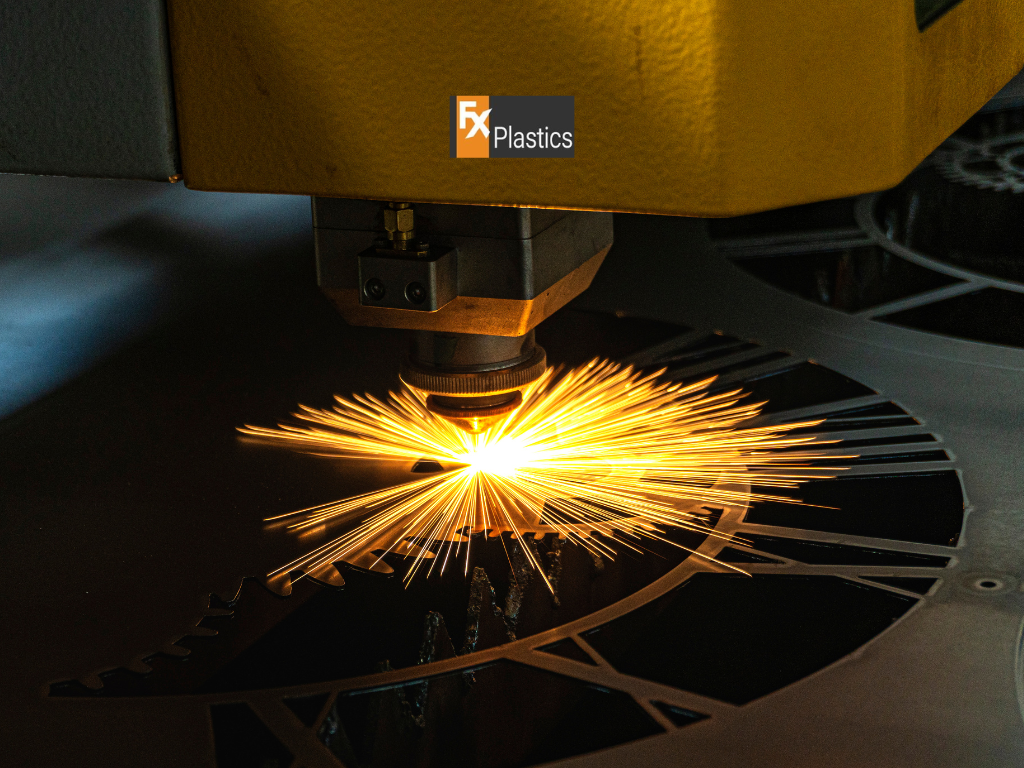
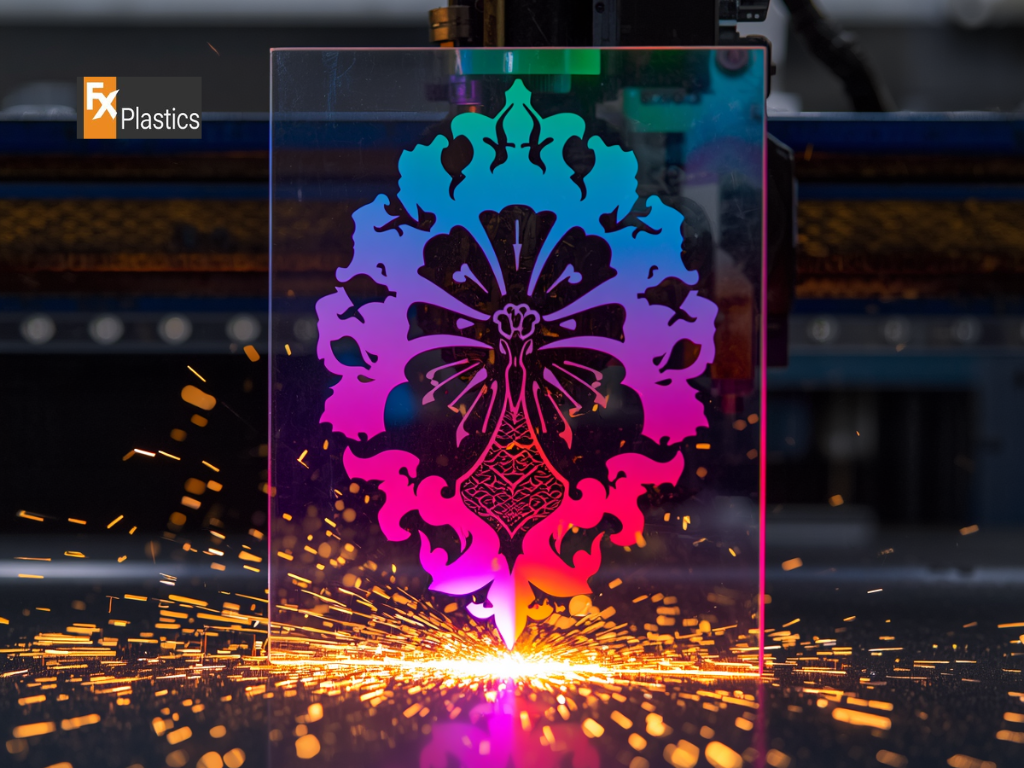
Laser cutting can be useful when the part contains more detailed two-dimensional geometry.
Australian plastics suppliers use laser cutting for intricate shapes and profiles. The process can also create an attractive, neat edge on suitable materials such as acrylic.
Think about signage, decorative profiles or components with detailed outlines.
These designs may be difficult to produce efficiently with straight saw cuts.
Laser cutting can also be useful when several identical shapes need to follow the same digital design.
Customers comparing laser cutting sydney services should still focus on the finished part.
Fine detail alone does not mean a laser is automatically the correct choice.
Material, thickness and edge requirements still matter.
Ask the fabricator to review the drawing rather than selecting the process only from the service name.
Laser cutting is not the default answer for every plastic.
Material suitability needs to come first.
Acrylic responds differently from other plastics. The supplier should know exactly what sheet material you plan to use before confirming the process.
This is especially important when comparing Laser Cutting Western Sydney providers.
Tell the fabricator whether the material is acrylic, poly-carbonate or another plastic.
Where possible, provide the product grade as well.
The final edge should also be discussed.
Perspex Australia’s acrylic guide notes that laser cutting does not leave the same mechanical abrasion marks as saw cutting, although the finished laser edge has its own characteristics.
Ask to see a representative finish when the appearance is important.
That is more useful than assuming every laser-cut edge will look identical.
Routing provides another option for shaped plastic parts.
Australian fabrication businesses use CNC routers for profile cutting and machining across materials including acrylic.
This can make routing useful for parts that need profiles, holes or other machined features.
The cutting tool itself affects the geometry.
Unlike a laser beam, a router uses a physical cutting tool with a measurable diameter.
That matters around tight internal corners and small details.
Avoid drawing features that look possible on screen without considering how the machine will create them.
For detailed parts, send the drawing to the fabricator before treating it as production-ready.
The supplier can review whether the geometry suits the proposed process.
Assembly should influence the drawing too.
Imagine a routed panel that needs to fit around another component.
The dimensions may look correct, but an internal corner can affect whether the two parts fit together as expected.
Explain which dimensions are functionally important.
Also identify holes or slots used for fasteners.
Do not apply extremely tight tolerances to every feature without a reason.
Instead, tell the fabricator which dimensions control assembly and which are mainly visual.
This conversation is particularly useful for customers working with Plastic Fabrication Western Sydney services.
A cutting drawing should describe a part that can be manufactured and assembled, not simply a shape that looks correct in CAD.
The same part can require different finishes on different edges.
A machine cover may hide most of its perimeter inside a frame.
A freestanding display may expose every side.
Treat those projects differently.
Laser cutting can provide a neat edge on suitable acrylic. Mechanical cutting may require additional polishing when a clearer exposed edge is required.
Mark visible edges on the drawing.
Then tell the supplier which areas need a higher level of finishing.
This prevents a vague instruction such as “polish everything”.
It can also make the quotation easier to understand.
For commercial work, the best process is not always the one with the most polished result.
The finish only needs to suit the function and appearance of the finished product.
Cutting may only be the first manufacturing step.
Acrylic and other plastics may also need polishing, bending, joining or broader fabrication after the profile has been produced.
Australian fabrication suppliers commonly combine CNC cutting with services such as polishing, fabrication and machining.
Tell the supplier about these later stages before cutting begins.
For example, a panel that will be bent needs to be considered as part of the final component.
A display may need several cut pieces joined together.
Planning only the flat shapes can leave important decisions until too late.
Businesses comparing Plastic Fabricators Sydney should therefore ask what happens after the sheet leaves the cutting machine.
A supplier capable of handling several production stages may suit a more complex project.
Good quoting starts with good project information.
Provide finished dimensions, quantity, material and thickness.
For shaped components, include a digital drawing where possible.
Australian CNC routing providers commonly request vector or CAD-based file formats such as EPS, DXF or DWG for profile work.
FX Plastics currently lists EPS, DXF, AI and PDF among its accepted laser-cutting enquiry formats. File requirements should still be confirmed for the specific process before final artwork is submitted.
Also identify important holes, slots and finished edges.
If the component must fit another part, say so.
Clear information allows cnc cutting services providers to quote the actual requirement rather than guessing from a rough sketch.
Two quotes may not cover the same result.
One supplier may quote only the cutting stage.
Another may include machining or edge finishing.
Compare the actual scope.
Check the material, quantity and finished dimensions first.
Then review the cutting process and any secondary fabrication.
Also ask whether the supplier can handle changes if the design needs revision before production.
Location can matter for bulky sheets or jobs that need local collection.
However, capability should remain the stronger selection factor.
A convenient supplier is less useful if the project needs several processes that the business cannot provide.
Compare what you will receive at the end, not just the price per cut.
FX Plastics can be useful when the project could suit more than one cutting method.
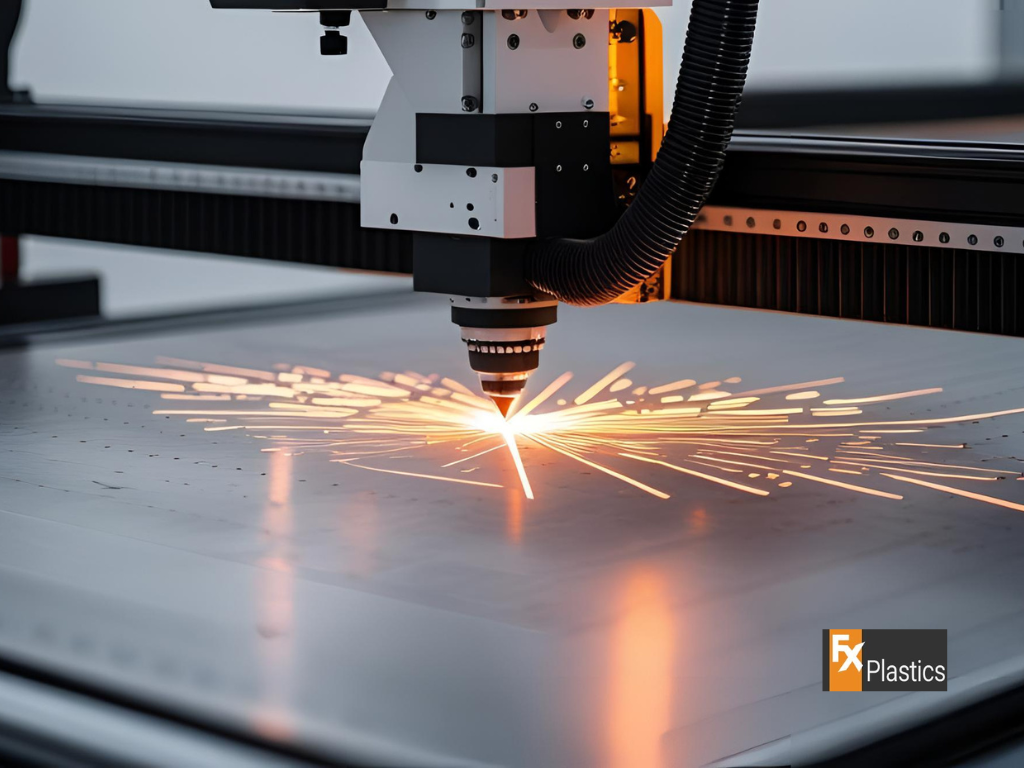
Its current website lists CNC routing and machining, CNC laser cutting and CNC saw cutting. It also lists diamond polishing, cut-to-size products and other fabrication services.
That range can be relevant when a drawing contains both simple and detailed parts.
For example, one project may include rectangular panels and shaped acrylic components.
Another may need cutting plus a polished visible edge.
FX Plastics currently operates from Hickeys Road in Penrith, making it a local option for customers seeking CNC Cutting Services Western Sydney.
Current material availability, machine suitability, tolerances and production timing should be confirmed for each project.
Start with the finished component.
Explain what you are making and how the part will be used.
Then provide the material and thickness if known.
Include all finished dimensions and the quantity required.
For custom profiles, send a drawing.
Mark holes, slots and other features clearly.
Also identify exposed edges that need a specific finish.
If the part needs further fabrication, mention that at the beginning.
This may include bending, polishing or assembly.
For detailed CNC laser cutting work, confirm the preferred file format with FX Plastics before sending production artwork. Its current FAQ lists EPS, DXF, AI and PDF for laser-cutting enquiries.
The key decision is not whether saw cutting, routing or laser cutting sounds more advanced.
It is whether the selected process suits the material, geometry, edge and finished application.
For CNC Cutting Services Western Sydney, that process-first approach can make supplier comparisons clearer and help the project move from drawing to finished component with fewer unanswered questions.