Acrylic sheets are used throughout Sydney in signage, retail displays, protective screens, light boxes, furniture, glazing, machine covers and custom fabricated products.
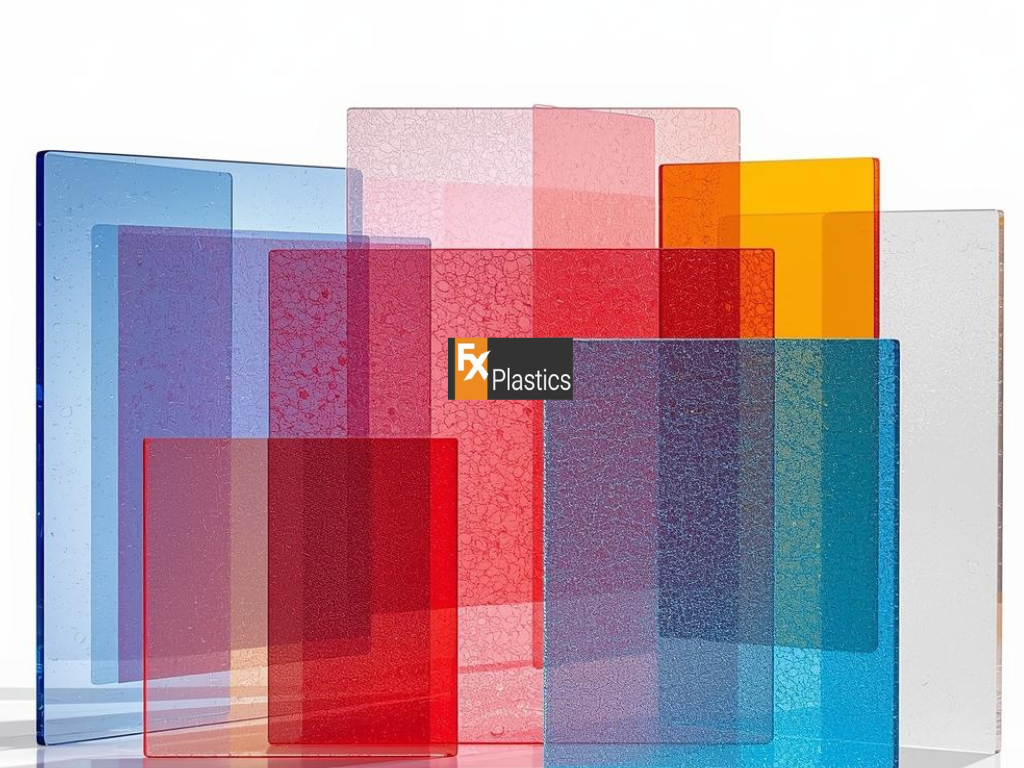
The material is available in clear, coloured, tinted, frosted, opal and mirrored finishes. It can also be cut, drilled, routed, bent, bonded and polished to produce components that would be difficult to create from an unmodified sheet.
Demand for acrylic continues across Australian signage, food and catering, architectural, interior-design and display applications. Current market reporting identifies these as important areas of use for cast acrylic sheet in Australia.
However, choosing Acrylic Sheets sydney customers can use successfully requires more than selecting a colour and ordering a rectangle.
The finished result depends on the acrylic grade, thickness, dimensions, support, cutting method, visible edges and installation environment.
A sheet suitable for a small indoor display may not be suitable for a large outdoor screen. Similarly, a product chosen for optical clarity may not be the best option where strong impact resistance or structural performance is required.
The following guide explains how to compare acrylic materials, plan fabrication and work with a suitable supplier.
The intended use should guide every later decision.
A clear retail display panel may need excellent visibility and polished edges. A coloured sign may place greater importance on appearance, light transmission and accurate cutting.
A machine cover may need to fit closely around equipment, while an acrylic screen may require stable supports and a pass-through opening.
Begin by recording the finished size, quantity and location.
Explain whether the component will be installed indoors or outside, mounted vertically or horizontally, supported around all edges or fixed only at selected points.
The supplier should also know whether the panel will be exposed to direct sunlight, heat, moisture, chemicals or frequent handling.
These factors affect material selection, sheet thickness and fabrication.
For acrylic screens for supermarkets, the design should take account of counter dimensions, customer interaction, cleaning and food-display protection.
NSW food businesses must take practical measures to protect food during storage and display, and supermarkets, delis and related businesses are covered by current food-safety requirements. An acrylic screen may support that process, but it should form part of a suitable food-handling and display system rather than being treated as the only control.
Acrylic is often chosen because it provides good visibility, relatively low weight and broad fabrication options.
It can be easier to cut, drill and shape than ordinary glass. This makes it useful for custom displays, removable covers, signs and screens.
However, acrylic is not appropriate for every application.
It may scratch more readily than glass, and poor drilling or overtightened fixings can cause cracks.
Polycarbonate or another engineering plastic may be more suitable where high impact resistance is the main requirement.
Glass may remain preferable where scratch resistance, specific glazing performance, fire performance or building compliance is required.
The comparison should be based on the complete installation rather than the raw sheet alone.
Acrylic is commonly described as being substantially lighter than glass, which may make handling and support easier in large display and screen applications. Current Australian supplier guidance places its density at roughly half that of glass.
However, a lighter material does not automatically make an installation compliant or suitable.
For safety barriers, load-bearing parts, windows or regulated building applications, the design and applicable requirements should be checked by an appropriately qualified professional [VERIFY].
Clear acrylic is commonly used where visibility is important.
Typical applications include display cases, machine covers, picture protection, counter screens and transparent signage.
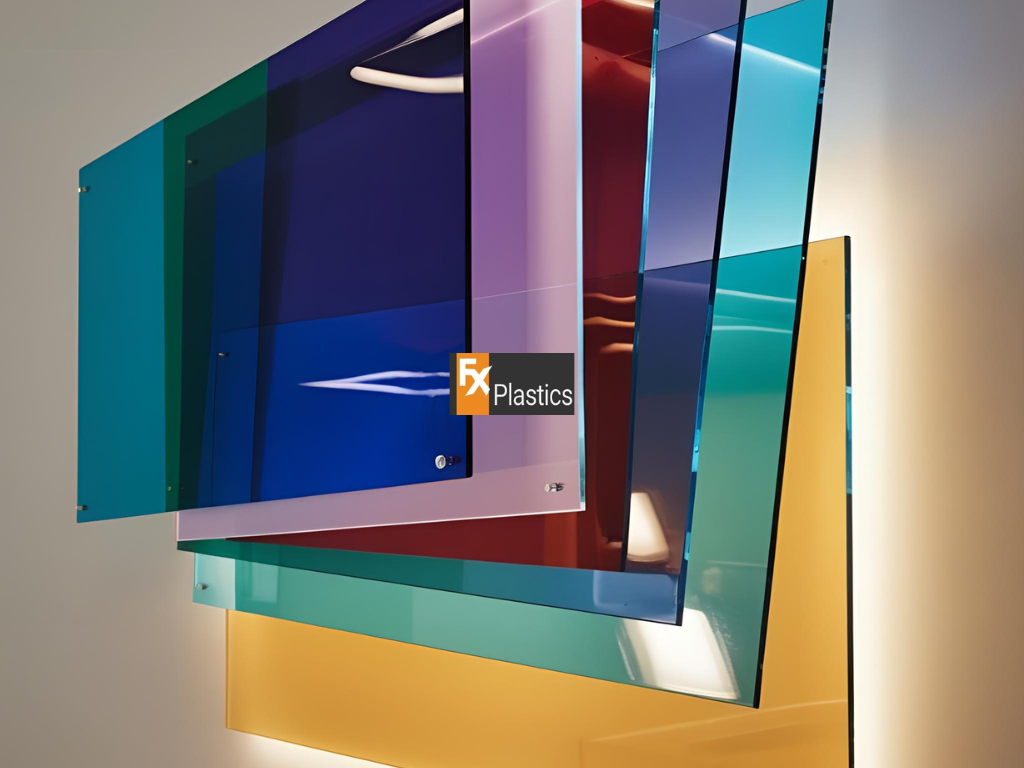
Tinted acrylic changes the colour or amount of light passing through the sheet while retaining some visibility.
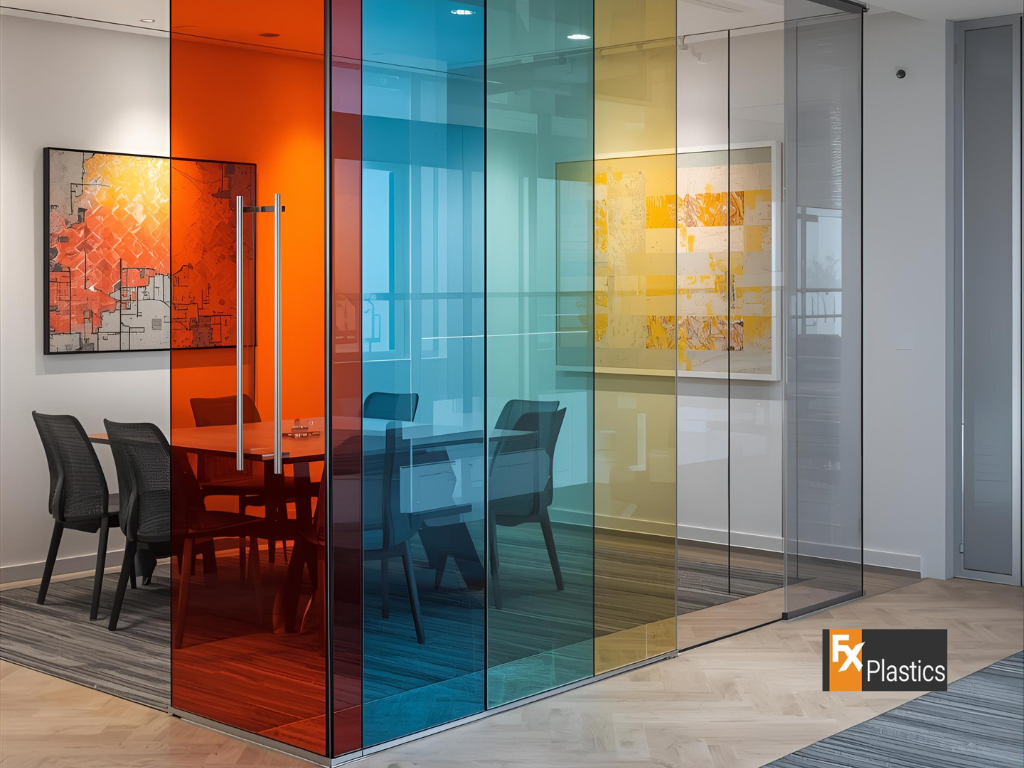
Frosted or satin acrylic reduces direct visibility and glare. It can suit privacy panels, decorative dividers and illuminated features.
Opal acrylic is often used in light boxes and signs because it diffuses light and helps reduce the visibility of individual light sources.
Solid-colour sheets may suit branding, decorative panels and retail fixtures.
Mirrored acrylic can create a reflective surface with less weight than traditional mirror glass, although it requires suitable backing and support to control visible distortion.
When selecting a finish, do not rely only on a website image.
Colour, transparency and light diffusion can look different under natural light, warm indoor lighting and illuminated signage.
A physical sample is useful when colour accuracy or light transmission is important.
The finish should also suit cleaning and handling. Gloss surfaces can make fingerprints and fine scratches more noticeable, while frosted finishes may conceal some marks but can behave differently under lighting.
Acrylic sheets may be manufactured using cast or extrusion processes.
The difference can affect thickness tolerance, machining, laser cutting, bending and price.
Cast acrylic is often selected for detailed machining, polishing and some laser-cut applications because it can produce a strong visual finish under suitable processing conditions.
Extruded acrylic may provide more consistent thickness and can suit general sheet applications, signs and cut panels.
However, the best choice depends on the exact product and fabrication method.
A customer should not assume that cast is always better or that extruded acrylic is suitable for every lower-cost project.
Ask the supplier which material is being quoted and why it suits the application.
This is particularly relevant when using Acrylic Laser Cutting Sydney services because different acrylic products may react differently to heat.
The quoted sheet should also be identified by colour, thickness, surface finish and whether it is suitable for indoor or outdoor use.
Where UV resistance, impact performance or light transmission is important, request current technical information for the exact product [VERIFY].
Acrylic thickness affects rigidity, weight, cost and appearance.
A small panel held securely inside a frame may work at a thickness that would flex noticeably across a large unsupported span.
The overall dimensions are therefore only one part of the decision.
Support spacing matters as well.
Acrylic supported along all four edges behaves differently from a panel attached only at the top and bottom.
Shelves and horizontal panels need careful assessment because they may carry products, equipment or decorative objects.
An acrylic screen may also require extra support where it includes a wide pass-through opening or a tall unsupported section.
Thicker acrylic can reduce visible movement, but it cannot correct a weak base or unsuitable bracket design.
The fixing system and sheet should be considered together.
For large acrylic screens, glazing or load-bearing components, an appropriate design assessment may be required [VERIFY].
A supplier can discuss common fabrication options, but structural suitability should not be assumed from sheet thickness alone.
Increasing thickness changes more than rigidity.
It adds weight, increases material cost and can affect cutting, drilling and bending.
Some colours and finishes may not be available across the same thickness range as clear acrylic.
A thick polished clear edge can become part of the visual design for furniture, displays and premium signage.
However, this appearance may be unnecessary when the edge is hidden inside a frame.
Thicker sheets may also require different machinery or longer fabrication time.
Before finalising a design, confirm that the chosen material is available in the required size and thickness.
A small sample can help when the customer needs to compare flexibility, edge appearance or colour.
For Acrylic Sheets Western Sydney projects involving several visible panels, ask whether the material can be supplied from one production batch.
This may help reduce noticeable colour differences, although complete uniformity should not be promised without current product evidence [VERIFY].
The cutting method should match the shape, thickness and required edge.
Saw cutting is commonly used for straight rectangular panels.
It may be the most efficient option for screens, shelves, covers and basic cut-to-size pieces.
CNC routing uses a rotating tool and can produce circles, curves, slots, holes and more complex profiles.
It may also suit thicker sheets and parts that require mechanical features.
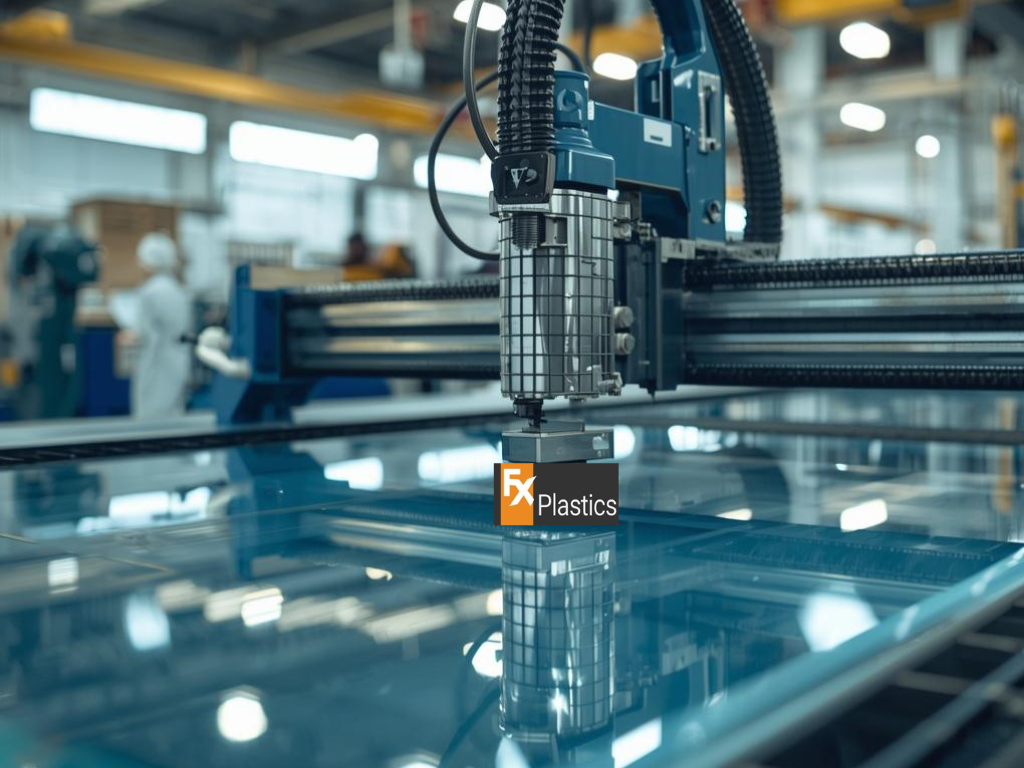
Laser cutting is often used for acrylic lettering, detailed shapes and decorative components.
Laser cut acrylic can have a clear-looking edge when the material, thickness and machine settings are suitable.
However, the process is not appropriate for every plastic or every thickness.
Internal corners, narrow details and closely spaced holes may also need adjustment to suit the chosen process.
The supplier should select the cutting method based on the finished component rather than forcing every design through one machine.
When requesting Acrylic Laser Cutting Sydney services, provide a vector or CAD file where available and confirm the final dimensions.
A PDF drawing should also identify important measurements and show which version has been approved.
Acrylic fabrication often involves more than cutting.
The finished component may need holes, slots, bends, bonded joins, supports or polished edges.
These requirements should be shown before production begins.
For an acrylic screen, the fabricator may need to create a pass-through opening, return folds or a base.
A retail display may require several panels bonded together.
A sign may need mounting holes and polished visible edges.
Different edge finishes are available.
A standard cut edge may suit a panel hidden inside a frame. Visible edges may be sanded, buffed, flame polished, diamond polished or finished through suitable laser cutting.
The most refined finish is not always necessary.
Polishing every edge can increase cost when only the front edge is visible.
If the part will be bonded, tell the fabricator before the edges are finished. Some polishing or heat processes may affect later joint preparation [VERIFY].
Bend locations also need planning.
Holes and cut-outs positioned too close to a bend line may weaken the component or create fabrication problems.
A complete drawing allows the fabricator to plan the correct production order.
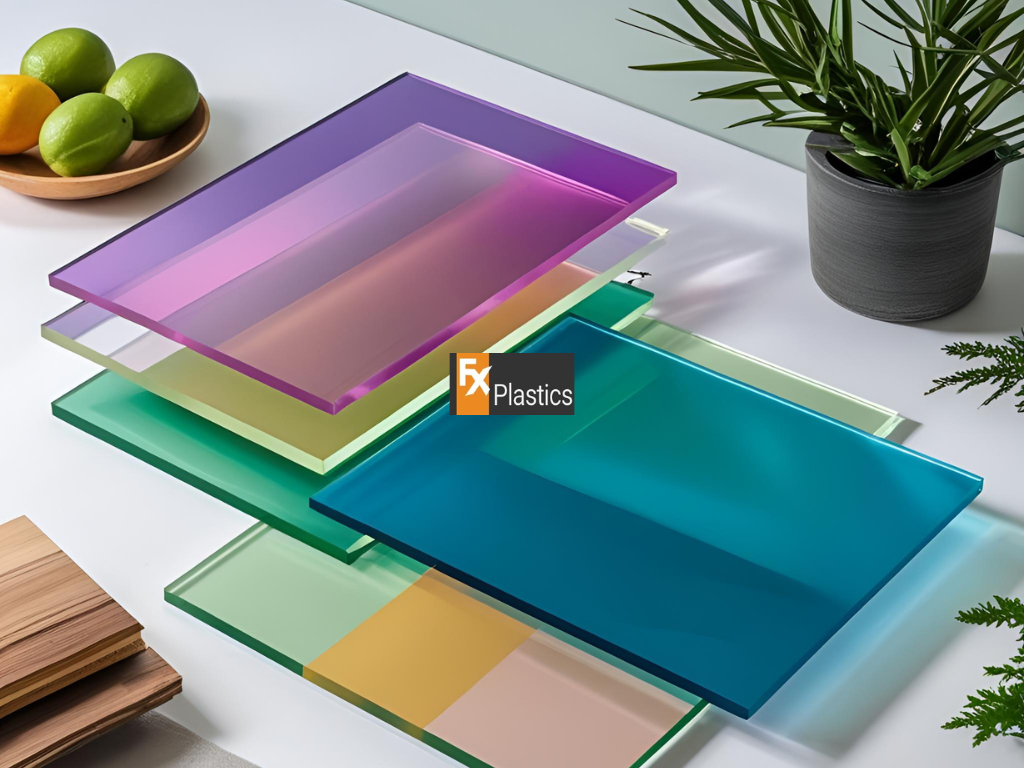
A useful quotation should describe exactly what is being supplied.
It should identify the acrylic grade, colour, thickness, dimensions and quantity.
It should also state the cutting method and list drilling, polishing, bending, bonding or assembly separately.
Do not assume that cut to size includes edge finishing or fabrication.
The quotation should identify whether protective masking remains on the sheet and whether packaging or delivery is included.
Where dimensions are critical, confirm the expected tolerance.
Saw cutting, laser cutting and CNC routing may have different practical tolerances.
A supplier should explain what can reasonably be achieved for the chosen sheet and component.
When comparing acrylic suppliers, consider whether they can complete the entire process.
A business that provides sheet supply, cutting, drilling, polishing and Acrylic fabrication may reduce the need to coordinate several contractors.
However, the relevant capability should still be confirmed for the material thickness, part dimensions and quantity.
Physical samples are valuable when colour, finish or transparency matters.
Ask whether the sample represents current stock and whether the same product is available in the required quantity.
For repeated parts, a prototype may help confirm fit and appearance before the full production run.
The supplier should also explain how parts are checked against the approved drawing.
This may involve measurements, templates or inspection of a first completed component.
Large acrylic sheets can flex or scratch during transport.
Packaging should support the panel and protect polished surfaces.
Confirm whether large panels will be delivered flat, vertically or in a protective frame.
Customers comparing acrylic vs glass windows cost should include fabrication, framing, delivery and installation rather than comparing only raw sheet prices.
Acrylic may reduce handling or structural demands in some projects because of its lower weight, but glass may provide advantages in scratch resistance, thermal performance or regulated glazing applications.
The correct comparison depends on the actual window or panel system [VERIFY].
Acrylic expands and contracts when temperatures change.
This movement should be considered in larger sheets, outdoor installations and panels placed near windows or heat sources [VERIFY].
A sheet should not normally be clamped so tightly that movement is prevented.
Screw holes may need to be larger than the fastener shaft, depending on the installation.
Washers, suitable brackets and spacers can help spread pressure.
Holes should not be positioned too close to the panel edge.
Where possible, request drilling as part of the fabrication service.
This helps keep the hole positions consistent with the main cutting file.
A panel fitted inside a frame may need installation clearance.
Ordering the sheet at exactly the measured opening size can cause problems where the frame is not square or the material needs room to move.
Acrylic screens should also have a stable base and suitable support.
A tall freestanding panel should not rely only on sheet thickness to prevent tipping.
Acrylic should be cleaned with soft materials and a product suitable for plastic.
Abrasive pads may scratch the surface.
Harsh solvents or unsuitable cleaners may cause clouding, crazing or surface damage [VERIFY].
Loose dirt should be removed carefully before wiping a clear panel.
Protective masking should generally remain in place during cutting, transport and installation.
It should then be removed in accordance with the supplier’s instructions.
Temporary masking should not remain outdoors for extended periods unless it is designed for that purpose [VERIFY].
Screens, signs and displays should be inspected periodically.
Look for cracks around holes, loose fittings, distorted supports or damage to polished edges.
The surface can remain clear and attractive with suitable care, but acrylic should not be described as scratch-proof or maintenance-free.
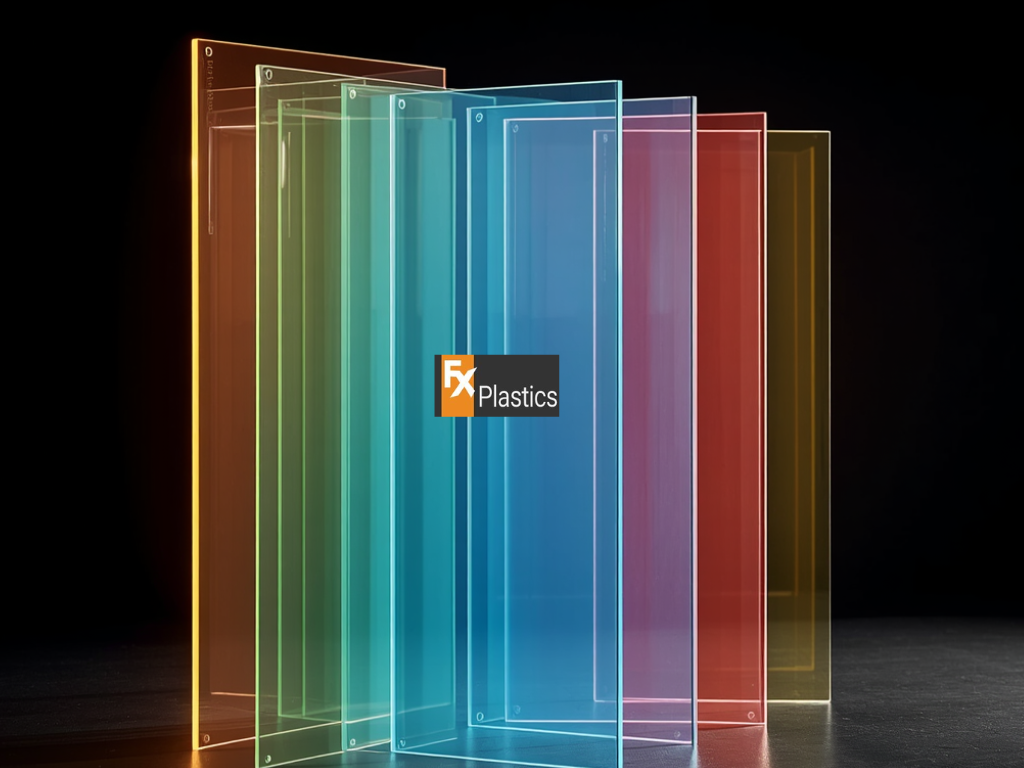
FX Plastics may be contacted when a builder, retailer, designer, manufacturer or homeowner needs acrylic sheets or custom-made plastic components.
Before making contact, explain how the finished item will be used.
Provide the approximate width, height, quantity, preferred colour and location.
Identify whether the panel will be installed indoors or outdoors.
Explain whether it will be framed, screwed, bonded, bent or used as a freestanding screen.
For acrylic screens for supermarkets, include the counter dimensions, required height and any pass-through opening.
For signage or display parts, identify which edges will remain visible and whether laser cut acrylic is preferred.
FX Plastics can then discuss available sheet types, suitable thicknesses and fabrication options.
Product availability, tolerance, finish, lead time and delivery should be confirmed for the specific order.
Accurate information helps avoid delays and incorrect fabrication.
Provide all dimensions in millimetres.
For holes, show the diameter and centre positions measured from fixed edges.
For curved parts, provide the radius or an approved digital file.
Show bends, slots, notches, openings and edge finishes clearly.
Explain whether the component must fit inside an existing frame or align with other parts.
Photographs can provide context, but they should not replace a dimensioned drawing.
Ask whether the quotation includes sheet material, cutting, drilling, polishing, bending, bonding, packaging and delivery.
Customers searching for Acrylic Sheets sydney or Acrylic Sheets Western Sydney may need anything from one replacement panel to a complete fabricated display.
Discussing the finished application helps FX Plastics identify material, fabrication and installation details before production starts.
The best result comes from selecting acrylic according to its intended use, confirming the appropriate thickness and planning every cut, bend and fixing before the sheet reaches the workshop.